

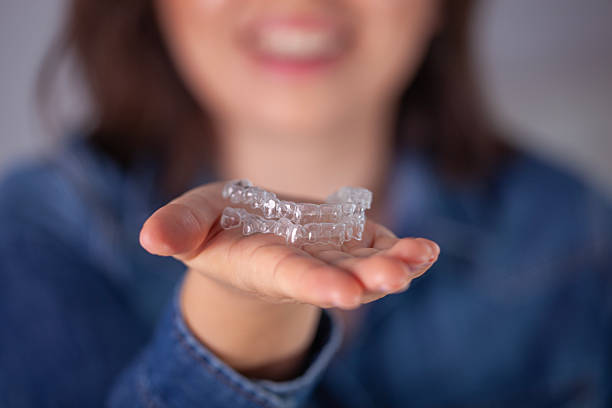
You bite into a sandwich and your back teeth come together, but the front teeth leave the lettuce hanging. When you look in the mirror and close your teeth, you can see why there’s a space between the upper and lower front teeth. Invisalign can treat certain adult open bites when planned tooth movement can bring the teeth into better contact. At Flanders Dental Studio in East Lyme, CT, we can help you find out what’s keeping your teeth apart and whether clear aligners make sense for your bite.
The space you see tells us where contact is missing. An exam helps us find out why. Some open bites come mainly from where the teeth sit. Others reflect the shape or position of the jaws and may need specialist evaluation or additional treatment.
You might notice the opening when you smile, have trouble biting through certain foods, or feel comfortable eating as you always have. What you notice gives us a starting point for the conversation.
What Is an Open Bite, and Why Don’t the Upper and Lower Teeth Touch?
An open bite occurs when some upper and lower teeth remain apart even when other teeth come together. It can affect the front teeth, the back teeth, or a section on one side.
How an Open Bite Changes the Way Teeth Meet
Your dentist uses the word occlusion to describe how your upper and lower teeth fit together. Part of checking your occlusion is looking at where the teeth touch and where there’s a space from top to bottom. That space is what your dentist measures when assessing an open bite. They also look at how the remaining contacts work as you close and move your jaw.
Anterior Open Bite
An anterior open bite is an opening between opposing front teeth. You might see a gap under the edges of your upper front teeth when your molars are touching. Those front edges help you bite through food, so you may find yourself biting into an apple or tearing a sandwich with the teeth farther back.
Posterior Open Bite
A posterior open bite involves back teeth. One or more pairs of premolars or molars may remain apart when you close. From the front, your smile may give you very little clue that this is happening. Because these teeth help crush and grind food, your dentist checks their contacts on both sides and looks for what might be keeping them apart.
How Is an Open Bite Different From an Overbite or Underbite?
Each term describes a different part of how the teeth meet.
• Open bite means there’s a vertical space between some upper and lower teeth when you close.
• Overbite measures how much your upper front teeth cover your lower front teeth vertically. Our guide to Invisalign for overbite correction explains what happens when that overlap is deep.
• Underbite describes a front-to-back relationship where lower front teeth sit ahead of the upper front teeth.
• Crossbite describes a reversed relationship where, for example, an upper back tooth closes inside its lower partner toward the tongue.
Can Invisalign Correct an Anterior Open Bite in Adults?
Yes, Invisalign can improve front-tooth contact in selected adults. Suitability depends on which teeth need to move, how much movement is needed, and how much the jaw relationship contributes to the opening.
When an Open Bite Is Mainly Caused by Tooth Position
Some front teeth sit higher or lower than the teeth next to them, or lean at an angle that keeps their edges too far apart. If those positions account for most of the opening, a plan to move selected teeth may help close it. The clinician also considers the space around the teeth and how well the gums and bone can support the movement.
How Invisalign Can Change Front-Tooth Contact
Picture a bite where the back teeth meet while the front teeth are still apart. For one person, moving selected front teeth closer together may help. For another, moving certain back teeth a little farther into their supporting bone may allow the lower jaw to close a little farther at the front. Some plans combine movements or change the angle of the front teeth as well.
Why Some Anterior Open Bites Need More Than Clear Aligners
Some movements are hard to achieve with trays alone, especially if they call for precise changes in the height of several teeth. When jaw structure contributes substantially to the opening, there may also be limits to what shifting the teeth can achieve. An orthodontist can help you compare braces, aligners with additional support, or treatment that addresses the jaw relationship.
Can Invisalign Fix a Posterior Open Bite?
Sometimes, if the back teeth can be guided into useful contact with aligners or other orthodontic support. A close look at where you make contact first helps determine what kind of treatment may work.
Why Back Teeth May Fail to Contact Properly
A back tooth may have come in short of its opposing tooth, or it may sit at an angle that keeps the chewing surfaces from meeting. In other cases, a tooth elsewhere hits first and stops the bite from closing farther. The relationship between the jaws can also contribute. Several different patterns can leave a similar-looking space.
Why Posterior Tooth Movement Can Be More Complex
A molar that needs to move toward its opposing tooth requires enough grip on the tray and careful control of how the tooth moves. At checkups, the clinician looks at how closely each tray fits and checks the bite with the trays out. Back-tooth contacts can also change during aligner treatment, so tell your clinician if you notice a new gap or a change in which teeth touch first.
How Dentists Evaluate Whether Posterior Open-Bite Correction Is Possible
The dentist checks which teeth touch, which are separated, and whether the opening is on one side or both. They look at the angle and height of the teeth and the condition of the gums and bone. Scans, photos, or X-rays may help show whether the problem involves a tooth’s eruption or root position, an early contact, or a broader bite pattern.
What Causes an Open Bite in Adults?
An open bite can reflect how your jaws grew, how your teeth came in, or how your bite changed over time. More than one factor may be involved.
Differences in Jaw Growth and Skeletal Development
In a skeletal open bite, the shape or angle of the jaws plays a major role in where the teeth can meet. For example, the lower jaw may sit at a steeper angle, leaving the front teeth farther apart when the back teeth touch. A dental open bite comes mainly from the positions of the teeth.
Tongue Posture and Swallowing Patterns
Your clinician may ask where your tongue rests or watch what it does when you swallow. In some people, the tongue rests between the teeth and may help maintain an existing gap. A tongue can also move into a space that’s already there. Those observations are part of the exam, and your clinician will consider them alongside tooth position and jaw structure.
Childhood Oral Habits and Their Long-Term Effects
Prolonged thumb or finger sucking during childhood can affect how the front teeth come in or how they tilt. The position of the teeth may change after the habit stops, especially during growth. In some people the opening persists into adulthood, years after the habit ended.
Tooth Eruption and Vertical Tooth Position
Eruption is the process by which a tooth comes in. A tooth that stops short of its usual height may stay separated from the tooth across from it. Dentists sometimes call the link between the teeth and the bone that holds them the dentoalveolar relationship. That relationship helps explain why a tooth may need to move vertically and how much support it has for that movement.
Changes in Bite Relationships Over Time
Teeth can shift after orthodontic treatment. They may also drift if gum disease has weakened their support, and other changes can affect how the jaws and teeth meet. If you used to be able to bite through food with your front teeth and that ability has changed, tell your dentist when you first noticed it. The timing can help guide the exam.
How Does Invisalign Move Teeth to Close an Open Bite?
Invisalign uses a series of trays to guide small movements. For an open bite, the plan may call for moving certain teeth up or down, changing their angles, or adjusting several contacts in stages.
Vertical Tooth Movement and Bite Contacts
Orthodontists use intrusion and extrusion to describe movement along the length of a tooth. Which movement helps depends on where the gap is and which teeth are already touching. A plan may change a tooth’s height, its angle, or both. Our guide to how Invisalign moves teeth walks through how a series of trays can guide planned movements.
How Tooth Intrusion Can Change Your Bite
Intrusion moves a tooth a little farther into its supporting bone along the length of the tooth. In selected front open bites, intruding certain back teeth can allow the lower jaw to rotate slightly as it closes, bringing the front teeth closer. The amount of movement that can be achieved varies, and some plans require added support to move the back teeth with enough control.
How Tooth Extrusion Can Help Opposing Teeth Meet
Extrusion moves a tooth outward from its supporting bone along its length, bringing its biting edge or chewing surface closer to the opposing tooth. This can help where a selected tooth needs a change in height to make useful contact. Your clinician considers the tooth’s root position, gum and bone support, and how much of the tooth will show when you smile.
When Attachments and Other Orthodontic Tools Can Help
Invisalign attachments are small, tooth-colored shapes bonded to selected teeth. They give trays a surface to grip, which can help guide movements such as extrusion. Some plans also use elastics or other orthodontic appliances when a movement needs more control. The choice depends on the teeth involved and what the clinician can achieve with each method.
What Your Dentist Looks for as the Bite Closes
Your clinician checks where the teeth meet when the trays are out and whether you have useful contacts for biting and chewing. A front gap may look smaller while the back contacts still need attention. Those checks help guide any final adjustments and establish what your clinician will monitor once you’re wearing retainers.
Dental Open Bite vs. Skeletal Open Bite
The distinction matters because a treatment plan can move teeth within the bone that supports them, while a change to adult jaw structure calls for different methods. An individual bite can have both dental and skeletal components.
When Tooth Movement Can Correct a Dental Open Bite
If the jaws fit together reasonably well and the opening comes mostly from where certain teeth sit, moving those teeth may improve contact. Two gaps that look the same size can need very different movements. Your clinician checks the angles of the teeth and where the roots sit before recommending aligners.
How the Jaws Contribute to a Skeletal Open Bite
In a skeletal open bite, jaw shape or position creates part of the space. Changing tooth position can improve contact in some cases, even while the underlying jaw shape stays the same. An exam and appropriate records help show how much improvement is realistic through tooth movement alone.
When Adults May Need Additional Treatment
After jaw growth is complete, a significant skeletal open bite may need a coordinated plan. An orthodontist can compare what aligners or braces with additional support may achieve and whether a consultation about jaw surgery makes sense. The decision depends on the jaw relationship, the movements involved, and what you want to improve.
What Problems Can an Untreated Open Bite Cause?
An open bite can affect how you cut through food, where you chew, or how your smile looks. Some people adapt comfortably and notice little day to day.
Difficulty Biting Into Certain Foods
If your front teeth stop short of each other, you might use the side of your mouth to bite through a bagel or cut an apple into pieces first. Tell your dentist which foods are difficult. That gives them a concrete idea of what you’d like treatment to change.
Changes in Chewing and Tooth Contact
If some back teeth remain apart, you may naturally chew where more teeth meet. Your dentist can check whether that matches the way your bite works and ask if you favor one side. Jaw discomfort can have several causes and is evaluated alongside any bite concerns.
Uneven Tooth Wear or Functional Stress
Where fewer teeth meet, some may do more of the work. Your dentist can look for wear on those surfaces and check whether the pattern lines up with the contacts they see. Clenching, grinding, and erosion can also affect tooth wear, so the whole pattern matters.
Smile Appearance and Confidence
You might notice the space between your upper and lower front teeth most in photos or while speaking. If its appearance is what brought you in, say so. Knowing what you’d like to see change helps your clinician explain which movements could improve your smile and how those changes might affect the bite.
Who Is a Good Candidate for Invisalign Open-Bite Treatment?
Aligners may be a good option when the plan calls for movements they can reasonably deliver, the teeth have stable support, and the patient can wear the trays consistently.
Adults With Open Bites Primarily Related to Tooth Position
Some dental open bites respond to a planned change in the height or angle of a few teeth. Your clinician looks at which teeth need to move, how far they need to go, and what will happen to the surrounding contacts. The size of the opening is one part of that decision.
Patients With Healthy Teeth and Periodontal Support
The gums and bone need to support teeth during movement. Active gum disease or untreated decay may need attention before orthodontic care starts. If you’ve been treated for gum disease, your dentist can check whether the tissues are stable and discuss what follow-up you’ll need during treatment.
Patients Who Can Wear Aligners Consistently
Flanders Dental Studio generally advises wearing Invisalign 20 to 22 hours a day, with instructions tailored to your treatment. When trays spend too much time out, the teeth may fall behind the plan and the next set may fit poorly. If wearing them as directed would be hard during your workday or meals, bring that up at your visit.
When a Complex Open Bite May Require an Orthodontic Specialist
A large skeletal component, difficult vertical movements, or several missing contacts across the bite may call for specialist planning. That evaluation can clarify what improvement is possible with tooth movement, whether additional treatment would make a meaningful difference, and what each approach would involve.
What Happens During an Invisalign Open-Bite Evaluation?
We’ll ask what you’ve noticed about your bite, then look at where your teeth meet and where they stay apart. You can tell us which change would matter most to you, whether that’s biting into food more easily or feeling more comfortable with your smile.
Measuring the Gap Between Upper and Lower Teeth
Your dentist checks the height and location of the opening and how many teeth are involved. They’ll also look for the teeth that touch first. The measurement helps describe your bite, and the rest of the exam helps determine whether aligners are a good fit.
Evaluating Tooth Position, Jaw Relationships, and Bite Function
Your dentist looks at how the teeth lean, how the upper and lower arches fit, and how your bite feels when you close. Photos and scans can record the shape of the bite. X-rays or other records may help clarify root position, bone support, or the relationship between the jaws.
Reviewing Oral Habits and Other Contributing Factors
Expect questions about prior braces or aligners, retainer wear, and when you first noticed the opening. Your dentist may check where your tongue rests or ask about habits that could affect tooth position. What they find will help determine whether those factors need further evaluation.
Planning Tooth Movements and Discussing Treatment Limits
Ask which teeth would need to move and how your clinician would check that they’ve moved as planned. We’ll talk through what Invisalign treatment in East Lyme could achieve for your bite, what could affect the result, and when a specialist opinion would help. You’ll have time to consider your options before choosing a plan.
Can an Open Bite Come Back After Invisalign?
Yes. Teeth can shift after active treatment, and the factors that helped create or maintain the opening can still influence the bite. Retainers and follow-up are part of keeping the contacts you’ve gained.
Why Retainers Matter After Open-Bite Correction
A retainer helps hold teeth in their treated positions after you finish moving them with aligners. Your clinician will explain when to wear it and how it should fit. If the retainer no longer seats as it used to, let your dental team know so they can look for changes.
How Contributing Factors Can Affect Stability
A persistent tongue resting pattern or the underlying jaw relationship may affect how well some corrections hold. The risk varies from person to person. Your clinician can explain which factors matter in your case and whether they call for care alongside orthodontic treatment.
Why Follow-Up and Retention Plans Vary
At follow-up, your clinician may check the retainer and look at where your teeth make contact without it. Tell them if a gap seems to be returning or if a different tooth touches first. Checking those changes can help them decide whether you need a retainer adjustment or a closer look at the bite.
How Long Does Invisalign Take to Correct an Adult Open Bite?
Timing depends on where the opening is, whether tooth position or jaw structure is the main cause, and what movements are needed. Consistent tray wear and how your teeth respond also matter. Checkups may show a need for refinements, which are extra trays used to complete planned movements or improve contacts. Your clinician can discuss an estimate after evaluating your bite. Learn more about the factors that shape an Invisalign treatment timeline.
FAQs About Invisalign for Adult Open Bite
Can Invisalign fix an open bite in adults?
Yes, Invisalign can correct some adult open bites when moving selected teeth can bring them into better contact. The best way to find out is to have the cause assessed. The exam can show whether the teeth mainly need a change in angle or height, or whether the position of the jaws calls for a different approach.
Can Invisalign close a gap between upper and lower front teeth?
It can sometimes close that vertical gap, which is called an anterior open bite. A space between neighboring teeth in the same row is a spacing concern and involves a different movement plan. If your back teeth touch first and the front teeth remain apart, your clinician can check what would have to move to bring those front teeth together.
Can Invisalign fix a posterior open bite?
It may help if the cause can be addressed by moving selected teeth. Your dentist first looks for what’s holding the back teeth apart, such as a tooth that sits short of the one across from it or another tooth that meets too early. That finding guides whether to consider aligners, additional orthodontic tools, or specialist assessment.
Can Invisalign fix a skeletal open bite?
Invisalign can sometimes improve tooth contact in a bite with a skeletal component by changing where the teeth sit. The underlying jaw anatomy remains the same. If the jaw relationship accounts for much of the opening, an orthodontist can explain the realistic goals of treatment with tooth movement and whether another approach could address the jaws.
Is an open bite harder to treat in adults?
Some adult cases are more complex because the jaws have finished growing. Teeth can still be moved in adulthood if their supporting tissues are healthy enough. The difficulty depends on how much the jaws contribute, which teeth would need to move, and whether those movements can bring the teeth into useful contact for biting and chewing.
Does Invisalign use attachments to correct an open bite?
Some plans use them. Attachments give a tray more grip on a tooth when it needs to move in a particular direction, such as a front tooth that needs to move toward the one across from it. Your clinician will explain where attachments would go and whether elastics or other tools would also help with your planned movements.
Can Invisalign correct an open bite and crowded teeth at the same time?
It can in some cases. The clinician checks how making room for crowded teeth would affect the opening and how the opposing teeth would fit after both changes. Sometimes the movements need to happen in stages. Our guide to Invisalign for alignment and bite problems explains more about planning for concerns that occur together.
Can an open bite return after Invisalign treatment?
Yes. Teeth can shift after treatment, and some factors that contributed to an open bite can still affect the result. Your clinician will prescribe a retention schedule and check how your teeth meet at follow-up. Call the office if the retainer stops fitting properly or if you notice the front or back teeth beginning to separate again.
Do all open bites need orthodontic treatment?
The decision depends on your dental health, how you bite and chew, and what you’d like to change. If you’re comfortable and the exam shows healthy teeth and stable contacts elsewhere, your dentist may recommend monitoring. If you have difficulty biting through foods or your contacts have changed recently, an evaluation can help you understand your options.
Explore Invisalign for Open-Bite Correction in East Lyme, CT
If your teeth stay apart when you bite down, tell us where you feel it and what you’d like to change. At Flanders Dental Studio, we’ll look at how your teeth come together, show you what we find, and talk about whether Invisalign or another approach fits your goals. Schedule an appointment for a bite evaluation in East Lyme, CT.
